

The Mediaeval Village
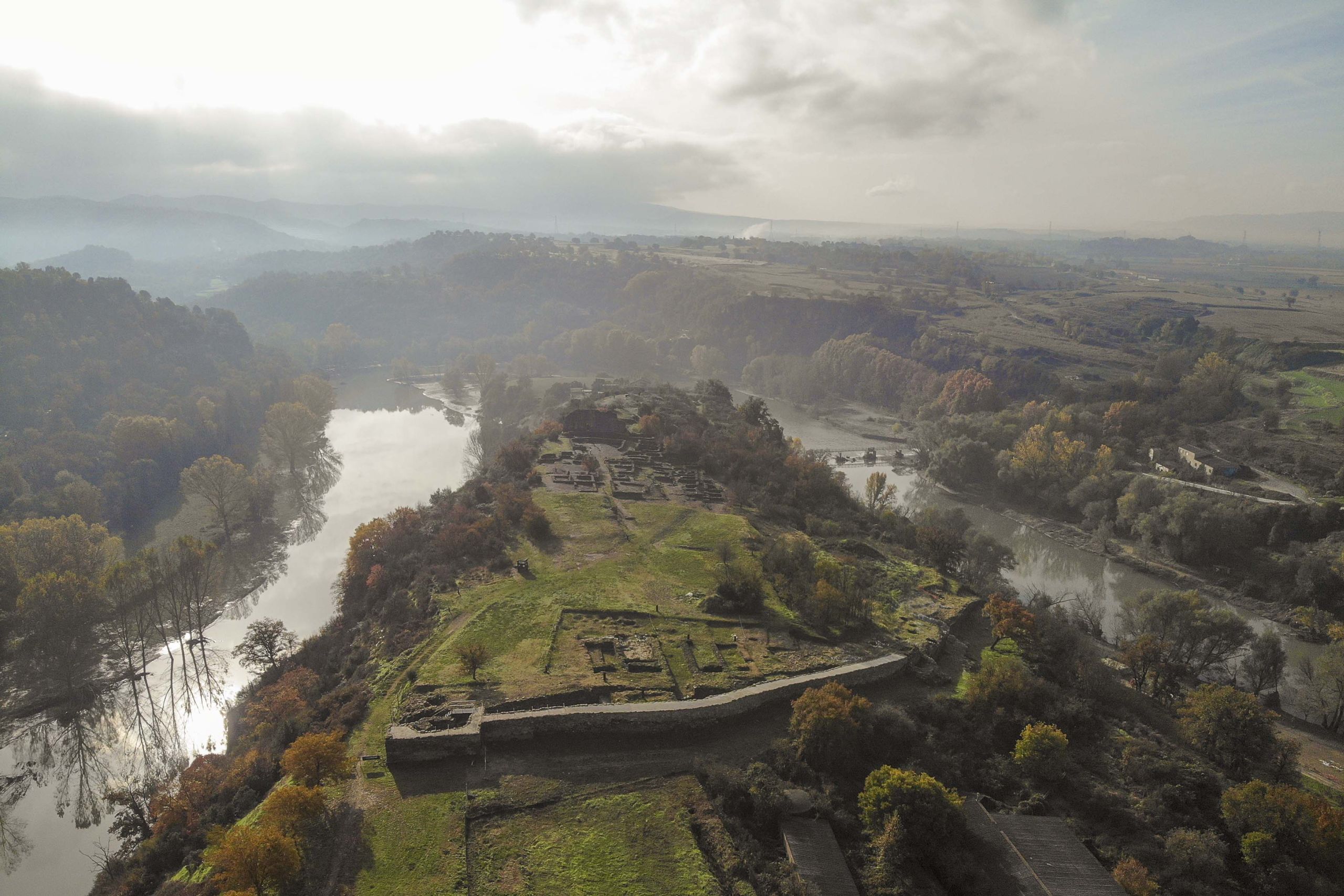
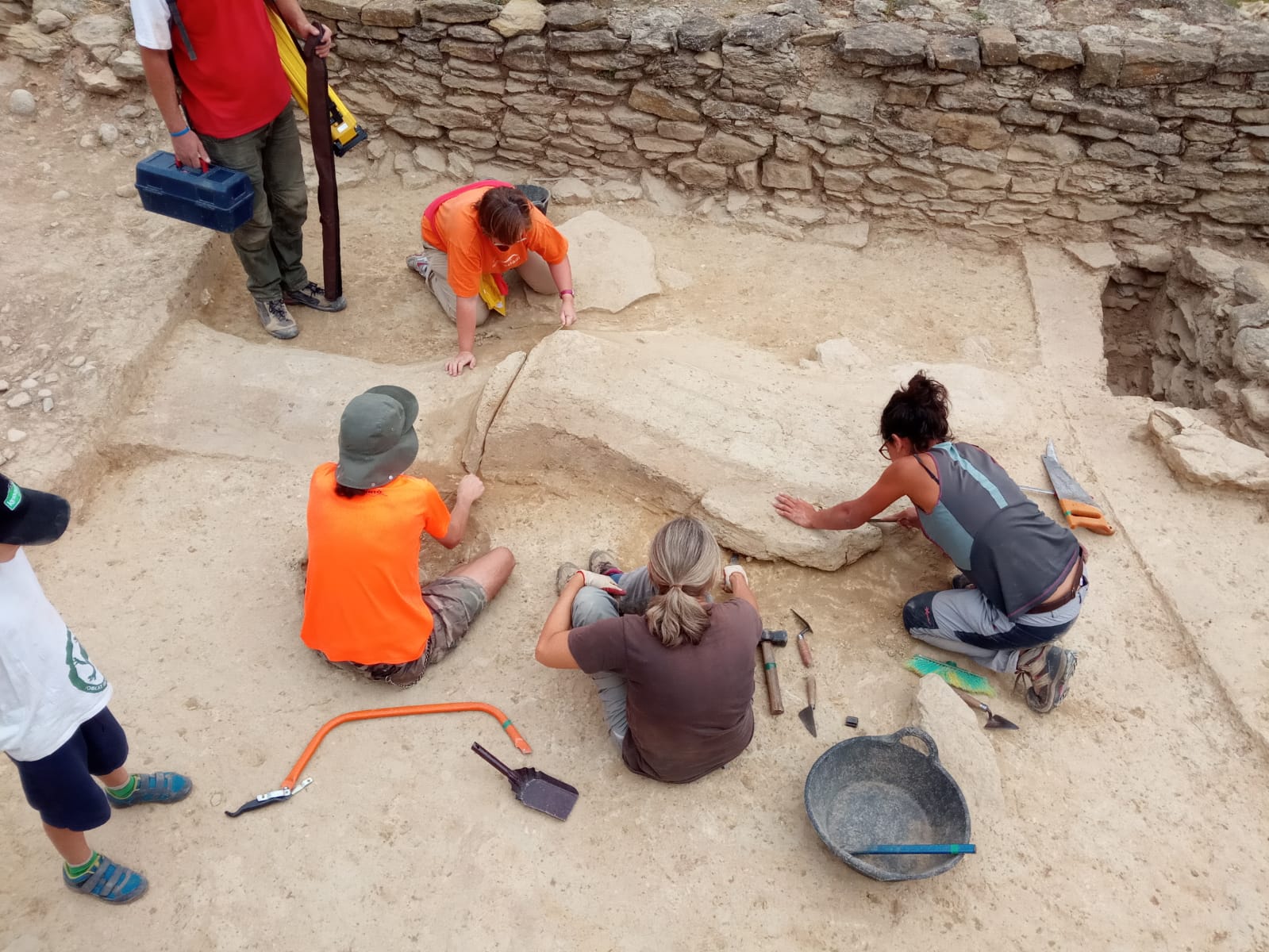
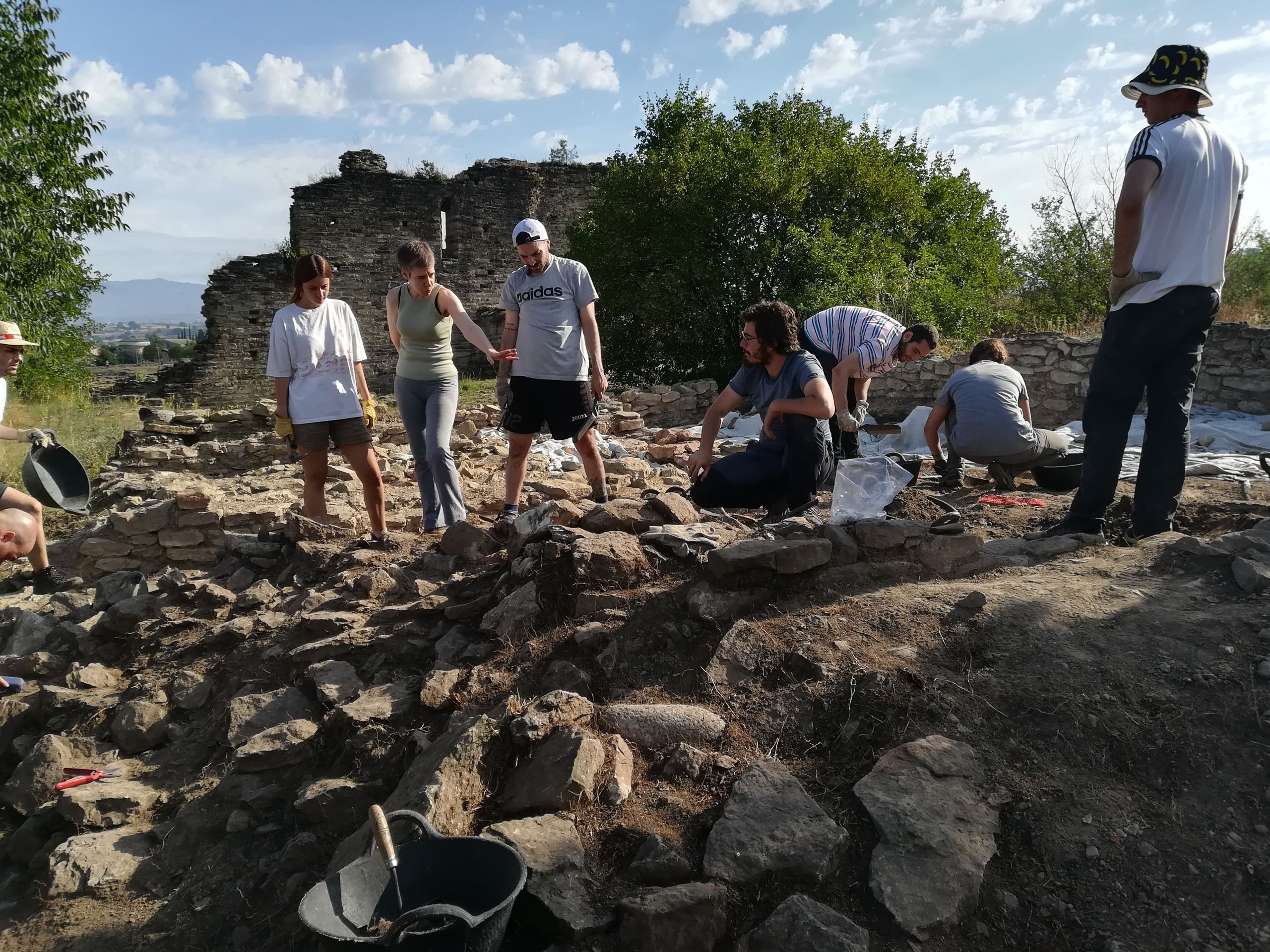
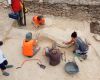
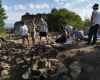
The excavation campaigns carried out in recent years have shed light on the mistakenly known Visigoth occupation. The work has discovered a group of silos, located near the wall, which breaks up the Iberian levels. The C14 dating of the material associated with the amortization of the silos dates to the 7th century, which testifies to the Visigoth occupation of the settlement. It has also been possible to document that the external wall of L’Esquerda belongs to the same period, as well as a series of burial sites located parallel to the external area of the wall.
At the end of the 8th century, to halt the Muslim advance, the Carolingian Franks fortified the line of the River Ter at strategic points: Savassona, Sant Pere de Casserres, and L’Esquerda, among others, and reinforced this Visigothic wall with a series of square towers. The first documentary mention of L’Esquerda dates from the year 826, in the Annals Reials (Royal Annals) of Louis the Pious when it is said that Aissó destroyed Roda Ciutat (RoddaCiuitas), the old name of L’Esquerda.
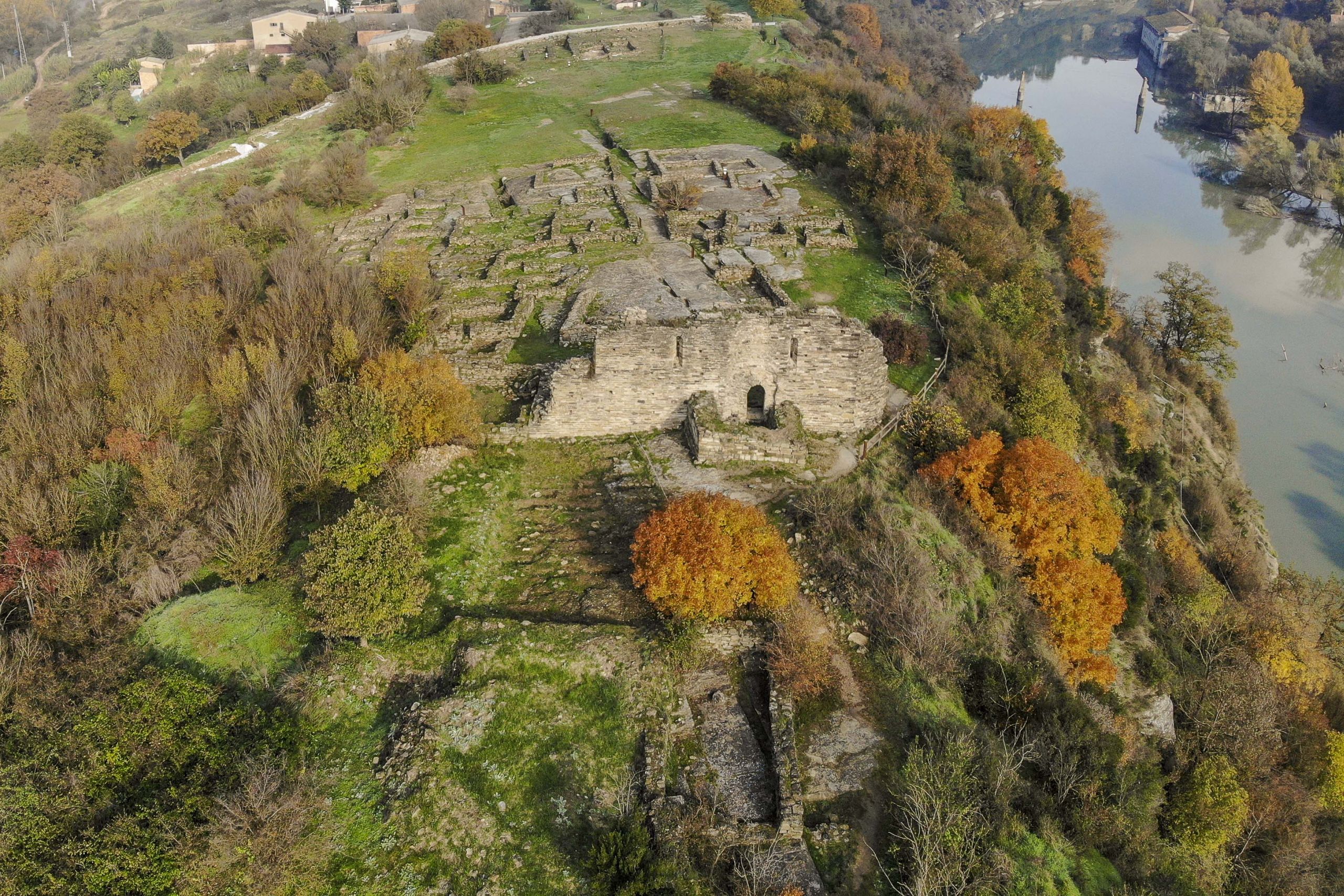
From the 10th century onwards, we have documentary references to a small church dedicated to Saint Peter, surrounded by a necropolis of anthropomorphic tombs dug into the bedrock. The dwellings from this period in the early Middle Ages are stone houses with a square floor plan.

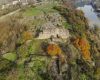
However, most of the excavated remains correspond to the late Mediaeval settlement (12th-13th century) located around the Romanesque church. The houses open onto a central square and are lined up along a street, which follows the same urban planning as the Iberian settlement. The houses are built on a stone basement, with a rammed-earth wall elevation and a tiled roof. In the northern sector of the settlement, a space has been found that was used for storage and food production and processing, with the presence of a barn, a mill, a threshing floor, a haystack, and possibly a press.
Towards the end of the 13th century, coinciding with a series of feudal struggles, the Esquerda began to be depopulated. The area burnt down several times until it was finally destroyed in 1314. The abandonment of L’Esquerda led to the growth of a population centre near the bridge, which had existed at least since the middle of the 13th century around the church of Santa Maria, the origin of the current Roda de Ter, which recovered and preserved the old name of the settlement.
