
Agriculture. Fields and crops
Experimentation in agriculture was one of the first projects that L’Esquerda set out to carry out.
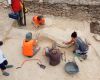
The excavation of a 13th-century structure, identified as a barn thanks to its burnt contents, and the subsequent palaeocarpological analysis, has made it possible to learn about the crop species of the time (wheat -Triticumdicoccum-, oats -Avena sp.-, barley -Hordeum vulgare-, among others), the associated "weeds", and the cultivation systems and techniques (biennial and triennial).
The information obtained has served as the basis for the formulation of the project "Experimental Archaeology: Application to Mediaeval Mediterranean agriculture" (DGICYT Project PB90-0430), financed by the Ministry of Education and Science, and carried out by the L’Esquerda team through the University of Barcelona. The project aims to carry out a study of Mediaeval agriculture - farming systems, soil erosion, etc. -. This is a long-term project (the first phase contemplated a minimum of 10 harvests), which is still in progress. The data obtained are compared annually and also compared with the annual production of the Butser Ancient Farm, which has different climatic and geological characteristics.
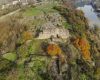
The cultivation area comprises most of the AREA's land and has been subdivided into different small fields according to the different types of experimental crops:

TRIENNIAL WINTER ROTATION (Field 1)
TRIENNIAL SPRING ROTATION (Field 2)
FERTILIZED AND UNFERTILIZED (Field 3)
BIENNIAL ROTATION (Field 4)
Monitoring is carried out weekly by means of growth monitoring sheets. At the same time, the segetal and ruderal vegetation of the whole area is monitored. (The results of the 1st project are published. See Publications in our web).